Should you start from Entry-Level Jobs if you don't get a career that fits your university Degree?

-
August 18, 2023
-
0 Comments
The Nigerian Workforce is saturated and it may be difficult to find a job that suits your university degree; this isn't even news any longer. There are a lot of people out there working jobs that have nothing to do with their degrees and would not prefer to have it the other way round. If we have to ask a couple of Nigerian graduates why they studied a particular course, majority will answer "The university gave it to me." This explains that half of the time, people are studying a course because they just want to bag a degree and not to pursue a career in it. This is not to say that there aren't people who are keen on getting a job related to what they studied in university but there are few of them. Some of them include medical, law, and engineering students.
Entry-level jobs or a Career that fits your degree?
The answer will never be the same for everyone because a lot of people are out of their degree lanes, chasing the bag and maybe their dreams too. Recently, a Nigerian Twitter user made a post, asking other Twitter users what they studied at the university and what job they currently do.
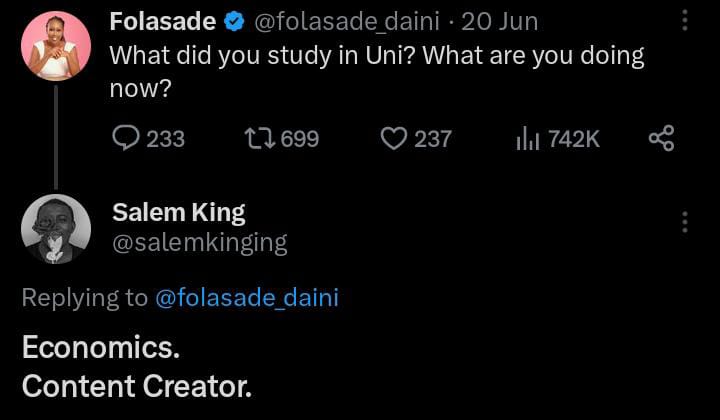
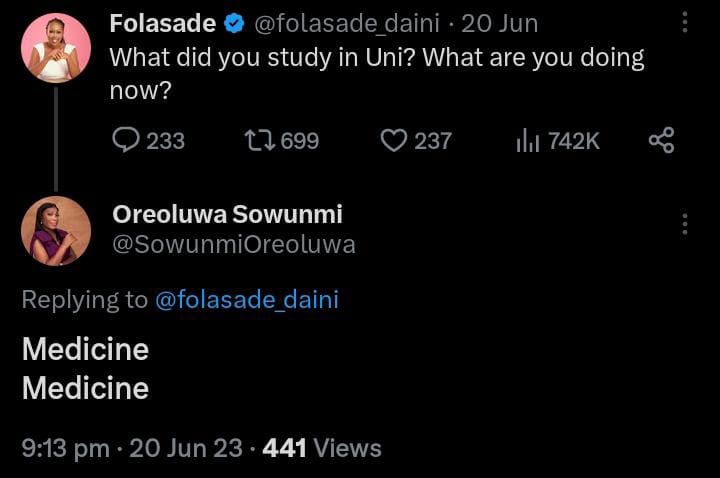
About 90% of Twitter users who responded to the tweet confirmed that they did a course that absolutely doesn't relate to the job they have now.

However, the remaining 10% who are working in jobs related to their degree such as medicine/surgery must have pursued fields with more rigid career paths.
Why do people leave their university degrees to explore unrelated fields?
While this is rampant, the answer is not far-fetched. The decision of people to explore paths that do not relate to their university degree can be influenced by several factors and they include the following:
Modernization
Technology is modernization and almost everyday, it provides a job for people. As technology advances, there is a new job being created because someone learns about it and can pull it off. This cycle of innovation and learning encourages people to move towards emerging fields, where they can contribute their skills and meet the demands of the changing job market.
Personal Growth
As the days go by, we see things differently, we meet new people and we're exposed to new perspectives. The good side to this is that we don't want to be where we have always been, we gain more clarity and move on from where we were before. Along the line, you may find a reason to step out of your comfort zone (your degree) to try something new or redirect your energy elsewhere. It really does happen.
Unemployment in the degree field
This is Nigeria, where unemployment is a thing. When graduates can't find a firm or organization that needs the degree they have acquired, they look for alternatives. Most times, due to economic conditions, the job market may not have openings that properly align with some degrees and this leaves most degree holders clueless about what the next course of action will be.
New Career? You may want to start from Entry-Level Jobs
If you are a Nigerian and don't get a job that fits your university degree, chances are you may want to explore a new career and it technically presents you as a "newbie". Good careers are mostly process-centric and you may have to go with that, every step of the way. Here are a few ideas you should catch as to why entry-level roles will do if your University degree doesn't work:
You may get a job faster
After taking several courses and undergoing rigorous training, it's interesting to say that you are now " this" or "that". You have new qualifications and most entry-level jobs may have fewer requirements; this makes it easier to get a job faster. Also, if there is a high demand for that particular role, companies may need to fill up that position more often and if you are on the lookout, you may be lucky.
An opportunity to leverage transferable skills
Transferable skills are skills that you already have either by working a previous job or learning from a class that you can effectively apply to subsequent roles/positions. If you have acquired some of these skills from your days at the University, they can come in handy to help you excel in your new career and even other various settings. If you are starting with an entry-level role, bringing in all of those transferable skills only makes you much better and presents you as a perfect candidate for the job.
You can build your network and a new one at that!
Network, community, and professional circle are good companies to be in, especially if you want to be close to opportunities. While you begin your career from the first stage, you need all the support, and being part of a network assists you to achieve this better. It helps you to gather knowledge, establish credibility, and position yourself for rich growth.
What you need to do as you get ready for your new career
Switching careers may be one of the toughest decisions to make. So, within the first few weeks, you are battling with doubt - whether to do it or not, how to do it, what people think about you doing it, and even where to do it. These are some things you must take to heart.
You need to stand your ground regardless of what people think
It is quite easy to hear "You studied Medicine, why are you trying out content creation?" It's natural for others to express concerns or opinions based on their perspectives, but ultimately, it's your life, your passions, and your journey. Trust in your abilities, and believe in yourself.
Ask more than enough questions
You are ditching a course you studied for some years to start afresh with a career that caught your passion, so, it is very important to ask all of the questions you have in mind. Asking essential questions is like building a roadmap for your journey ahead; they help you to assess the risks involved in the career switch, and identify potential obstacles and ways to manage them.
Check if there are entry-level or internship opportunities for your new career
If you need more practical experience, exploring entry-level positions or internship opportunities is a good way to move. Talk to people who might have connections in different companies with vacancies; if they are willing to put you up with a vacancy, that's a great opportunity, one that can even earn you a full-time job.
Now, back to the main question, " Should you start from entry-level jobs if you don't get a career that fits your university degree?" Our answer is this - If you have to, do it! You are not In any way losing but gaining, so why not? You can gain the experience you need to move ahead, build more skills, meet new people, and even find better opportunities in the process. You may want to remember that starting anew is not a step backward, it's just another leap forward into the world of possibilities.
Why Choose a Career that Aligns with Your Degree
Choosing a career in your degree field can be important for a variety of reasons. Here are ten reasons to consider:
Expertise
Your degree equips you with specialized knowledge that can set you apart in the job market.
Passion
Often, your degree reflects a subject you are passionate about, which can lead to a more satisfying career.
Investment
You've invested time and resources into your education; using your degree can maximize that investment.
Credibility
A degree can lend credibility and authority in your chosen field, often required for certain professional roles.
Networking
Your academic journey has likely helped you build a network of peers and mentors in your field.
Skillset
Your degree has helped you develop a specific set of skills tailored to your field, making you a valuable asset.
Career Progression
Many careers have a clear progression that often requires a relevant degree for advancement.
Market Demand
Some fields have a high demand for degree holders, offering better job security and opportunities.
Personal Growth
The process of earning your degree can foster personal development, critical thinking, and problem-solving skills.
Alignment with Goals
If your long-term career goals align with your degree, pursuing a career in that field can be a strategic move.
How to Get Jobs Relevant to Your Degree
Gettings jobs relevant degree requires the following procedures:
Self-Assessment
Begin by evaluating your strengths, weaknesses, and interests. Understand the skills you've gained from your degree and how they translate to the job market.
Research
Investigate industries and companies that interest you. Look for roles that require your degree or skills. Use job search engines, company websites, and professional networks to find opportunities.
Networking
Connect with alumni, professors, and professionals in your field. Attend career fairs, seminars, and workshops. Networking can often lead to job referrals and opportunities that aren't advertised publicly.
Resume and Cover Letter
Tailor your resume and cover letter for each application. Highlight relevant coursework, projects, and internships. Make sure to showcase how your academic background makes you a suitable candidate for the job.
Online Presence
Maintain a professional online presence. Platforms like LinkedIn can be particularly useful. Engage with content in your field, share your projects, and make connections.
Interview Preparation
Prepare for interviews by researching common questions and practicing your responses. Be ready to discuss how your education has prepared you for the role.
Internships and Volunteering
Gain experience through internships, part-time jobs, or volunteer work related to your field. This can provide practical experience and enhance your resume.
Continuous Learning
Stay updated with the latest trends and developments in your field. Consider additional certifications or courses that can give you an edge in the job market.
Follow-Up
After interviews or networking events, send thank-you notes or emails expressing your continued interest in the position or gratitude for the advice received.
Persistence
The job search process can be lengthy and challenging. Stay persistent, keep applying, and don't get discouraged by rejections. Learn from each experience to improve your chances in the future.
Remember, securing a job is not just about what you know, but also who you know and how you present yourself.
Did you enjoy reading this? Sign up on our website to have full access to the career advice page. You can also get entry-level jobs that fit your new skills.
Want to connect with us on social media too? Here you go:
Facebook: Hub for Jobs
Twitter: @hubforjobs
Instagram: @hubforjobs
LinkedIn: HubForJobs
Top Nigerian video directors: How much do Nigerian video directors charge per video
How Much Does BRT Driver Earn Monthly In Lagos
Recent Post
-
-
 WorkFlowsHR: the best HR software in Nigeria July 25, 2024
 -
-